Lesson 13
وَقَالَا ٱلْحَمْدُ لِلَّهِ
If a word ends in a long vowel وَقَالَا and the word after it starts with a sukoon, ٱلْحَمْدُ لِلَّهِ, the long vowel is dropped. This only applies when you continue reading. For example this word وَقَالَا reads Waqaalaa. I pronounced the long vowel as normal.
This word reads ٱلْحَمْدُ لِلَّهِ Alhamdu lillah. Now when reading the words together we said in the previous lesson that the hamzatul wasl gets dropped. So it appears to read wa qaalaal hamdu lillah.
Now we also said when a word ends in a long vowel and the letter after it has a sukoon we drop the long vowel. The long vowel alif appears here in the example. The letter after it is a laam with a sukoon. Lets drop the long vowel alif. Now we read it as wa qaalal hamdu lillah and not wa qaalaal hamdu lillah. Wa qaalal hamdu lillah
أَمَتَّنَا ٱثْنَتَيْنِ
In this example, the first word reads amattanaa with a long vowel alif, and the second word reads ithnatayn. Now if we are reading them together we drop the hamzatul wasl. Now we see a thaa that has a sukoon and before it is a long vowel. We drop the long vowel. Now we read it together as amattanath natayn
مُخْزِى ٱلْكَـٰفِرِينَ
Another example, The first word reads Mukhzii with the long vowel yaa. The second word reads Al kaafiriin. Now if we are reading them together we drop the hamzatul wasl. Now we see the laam has a sukoon and before it there is a long vowel. We drop the long vowel. Now we read it together as Mukhzil kaafiriin
ءَامَنُوا۟ ٱتَّقُوا۟
This is a little tricky. The first word reads aamanuu with the long vowel waw. The second word reads ittaquu. Now if we are reading them together we drop hamzatul wasl.
Now we said if there is a long vowel and after it there is a letter with sukoon we have to drop the long vowel. But where is the letter with sukoon? Do you remember the rule of the shaddah? The taa in this example with the shaddah is actually like this تْتَ . The first taa has a sukoon and the second taa has a fatha.
So now we know where the sukoon is. Now we drop the long vowel. Now it reads aamanut taquu.
Another question? What’s that alif with a circle on it? Why didn’t we pronounce it? Whenever you see an alif with a full circle symbol like this, it’s called the silent alif and you don’t pronounce it. You can follow our tajweed video for more details

مُحِلِّى ٱلصَّيْدِ
Ok this last example is a little tricky. The first word reads Muhillii with a long vowel yaa. The second word reads Assayd. Now if we are reading them together we drop hamzatul wasl. We see a sukoon on the laam and a long vowel before it. We drop the long vowel. Now it reads muhillis sayd.
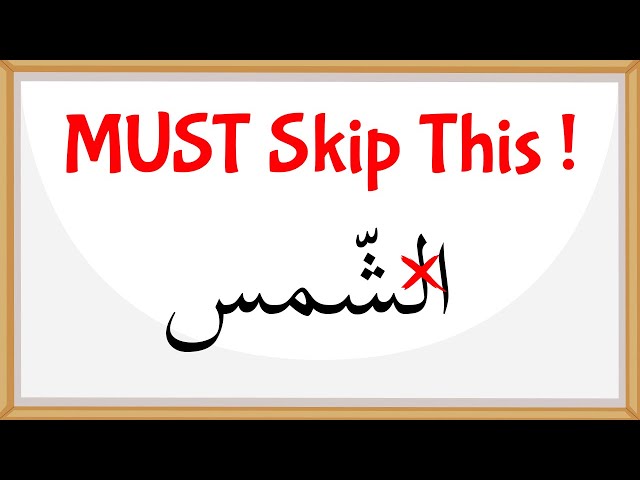
Notice how I also didn’t pronounce the laam. I said muhillis sayd and not muhillil sayd. That is because when you see an alif laam and after it there shaddah or a sun letter, you drop the laam. You can learn more in our tajweed video posted in the link.
Now you should be ready to read on your own and you need to follow these steps to progress.
1. You have to practice reading everyday with a minimum of 1 page of quran.
2. Wherever you get stuck, refer back to a quran reciter of your choice to see how they say the part you are stuck on. This will clear the error for you.
3. When you advance a little you need to follow our tajweed videos for more Quranic rules.
Good luck in shaa Allah. May Allah reward you for your efforts.